
Categories
MortgagesPublished March 9, 2026
How Property Taxes Really Work After You Buy a Home (and why so many new homeowners get surprised the first year)

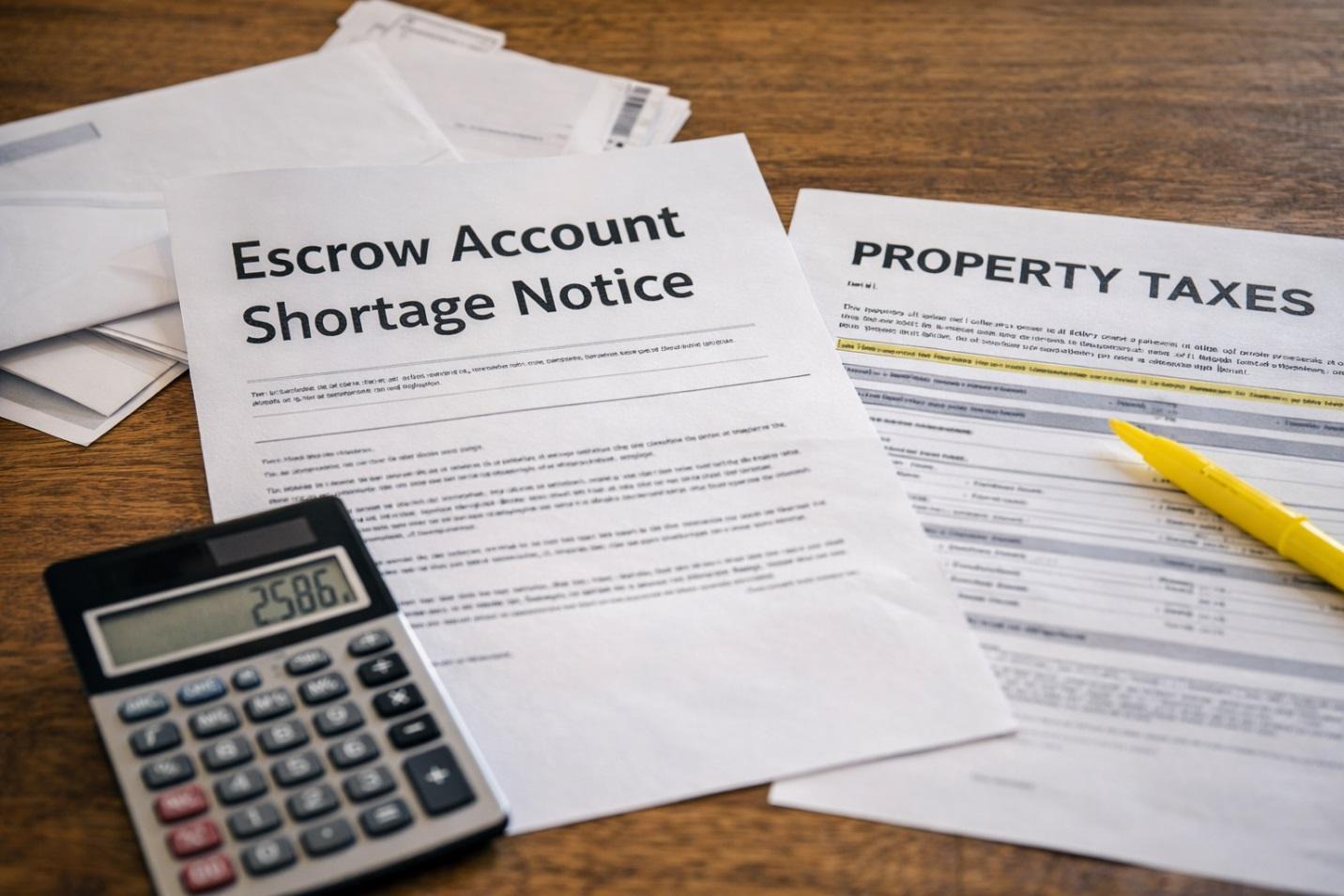

One of the most common moments after closing sounds like this:
“Why did my payment go up?”
Nothing changed with the house.
Nothing changed with the loan.
But the tax bill did.
Property taxes are one of the least understood parts of homeownership because what you see before closing is often not what you live with after closing. Once you understand the timing and adjustments, it stops feeling random — and starts feeling predictable.
First: Your Payment Isn’t Just a Payment
Most homeowners don’t pay property taxes directly to the county each month.
Your lender collects them through your mortgage payment inside your escrow account.
Each month your payment includes:
- Principal (paying down the loan)
- Interest (cost of borrowing)
- Insurance
- Property taxes
The lender holds the tax portion until the bill is due, then pays it on your behalf.
So when taxes change… your monthly payment changes.
Why the Tax Amount Changes After You Buy
The number you saw when you made your offer was based on the previous owner’s situation — not yours.
When a property sells, the county reassesses the value closer to the purchase price.
That means the tax basis resets.
In simple terms:
Previous owner lived there 15 years → low assessed value
You buy at today’s market price → new assessed value
Your taxes are now calculated from the newer number.
This adjustment typically shows up months later, which is why new homeowners feel blindsided.
The Escrow Shortage (The Letter Everyone Gets)
About 6–12 months after closing, your lender reviews the escrow account.
If the taxes were higher than estimated, the account comes up short.
Now two things happen at once:
- You repay last year’s shortage
- You fund next year’s higher taxes
That’s why the payment jump can feel dramatic — it’s temporary catch-up plus permanent adjustment combined into one change.
After the correction year, payments usually stabilize.
New Construction Homes Are Even More Noticeable
With new builds, the first year taxes are often based mostly on land value — not the finished house.
Once the home is fully assessed, the tax bill reflects the actual property.
So the second year commonly brings the largest adjustment homeowners will ever see.
It isn’t an error.
It’s the first time the home was taxed as a completed property.
What You Can Actually Control
You can’t control the tax rate — but you can prepare for it.
Smart homeowners:
- Expect a reassessment after purchase
- Keep a cushion in savings the first year
- Review the county valuation for accuracy
- File an appeal if the assessed value is clearly wrong
The surprise isn’t the taxes — it’s the timing.
The Big Picture
Property taxes don’t suddenly increase because something went wrong.
They increase because ownership resets the valuation clock.
Once the first adjustment passes, they typically move gradually rather than dramatically.
Understanding that upfront turns a stressful letter into a predictable step in owning a home — and helps you plan your payment confidently from the beginning.

Katie Evans
Lead Agent | Katie Evans | Living 48 Real Estate Team
or another way