
Categories
Arizona Buyers, Arizona Home Owners, Real Estate InvestmentPublished September 28, 2026
The School District Effect: Why It Drives Your Home Value

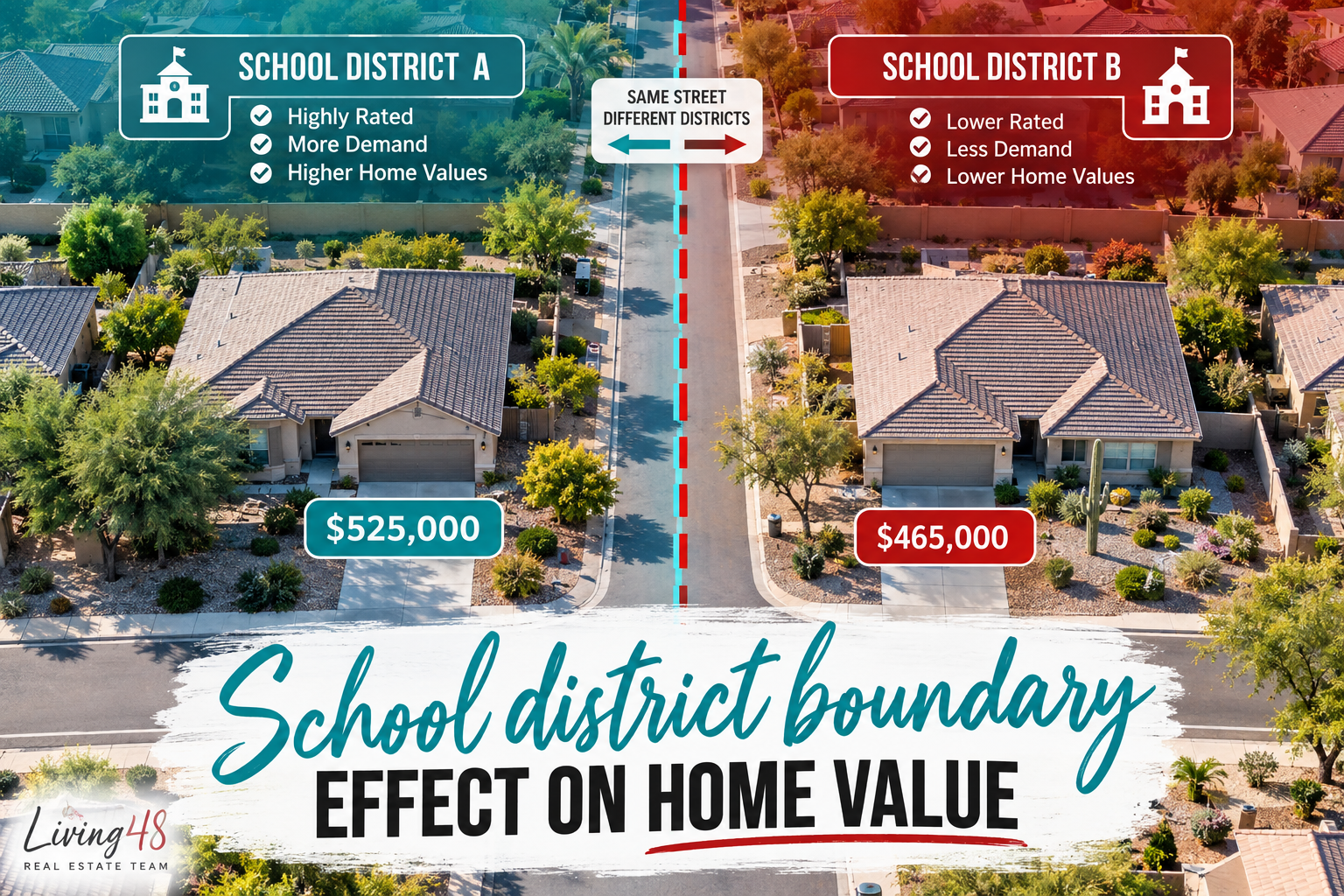
The School District Effect: Why an Invisible Line Can Add $60,000 to a Home's Value
Two homes. Same developer, same year built, identical four-bedroom floor plan, same square footage, less than 200 yards apart on opposite sides of the same street.
One sold for $60,000 more than the other — and went under contract in under 10 days.
The difference wasn't the house. It was an invisible boundary line running down the middle of the road: one home fed into a top-rated school district, the other into an adjacent, lower-rated one.
This is The School District Effect — one of the most powerful, least-discussed drivers of home value in real estate. And it matters even for buyers who don't have kids.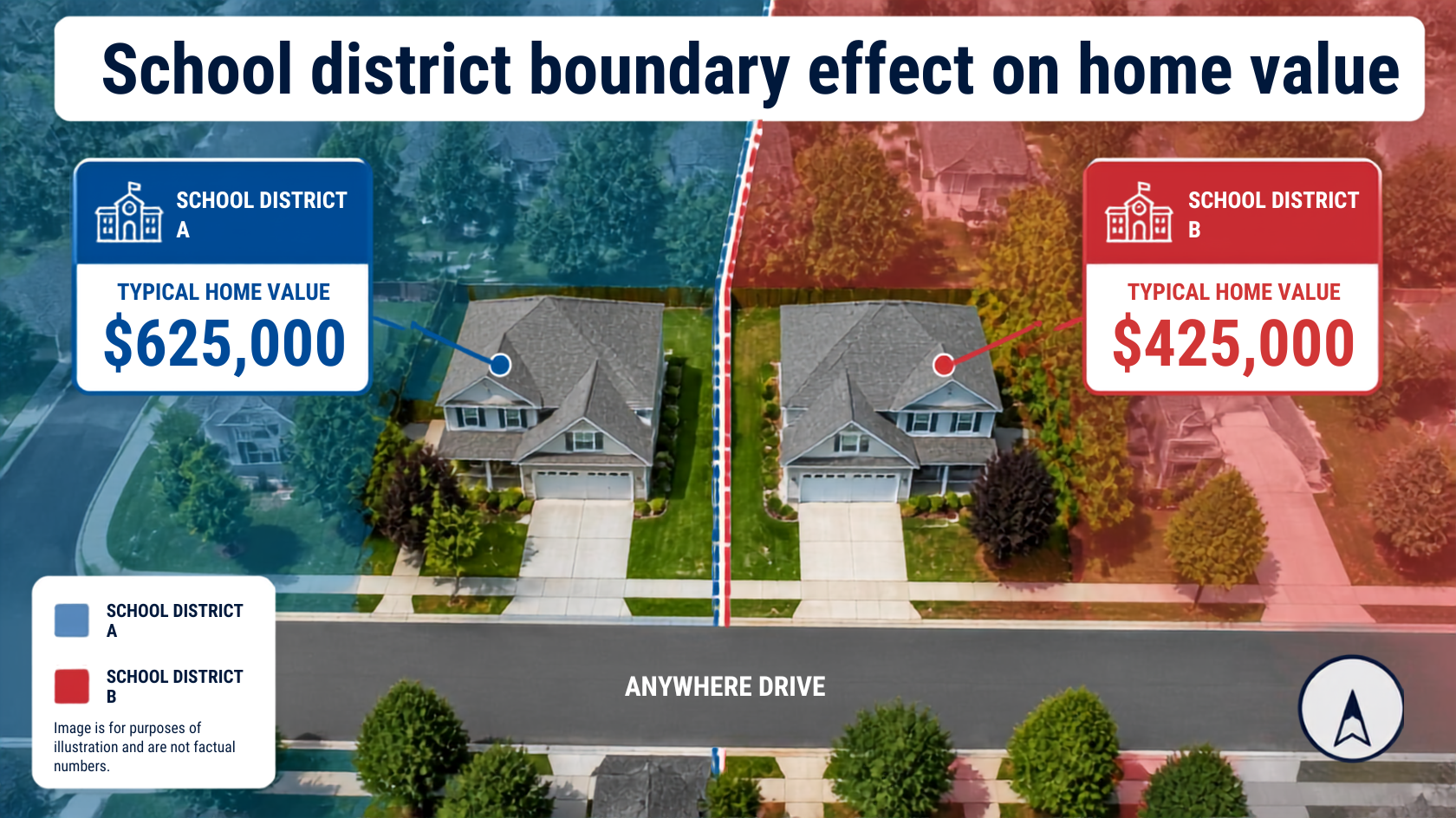
"I Don't Have Kids — Why Should I Care?"
This is the most common objection, especially from young professionals and downsizers. The answer comes down to resale liquidity and risk protection.
A home isn't just a place to live today — it's an asset that will eventually be sold or rented out. Buying in an A-rated school district automatically captures the largest, most active buyer demographic in real estate: families.
Buying in a lower-rated district, by contrast, can eliminate an estimated 50%–60% of the future buyer pool. When it's time to sell, that means a longer time on market, less negotiating leverage, and appreciation that tends to lag the broader market. A strong school district creates a lasting demand floor under a property's value — buyer interest that holds up regardless of broader market conditions.
The Economic Shield: Recession Protection
School district strength also acts as a buffer during market slowdowns.
When overall buyer demand contracts during a downturn or rate-cycle shift, demand for top-performing schools tends to stay remarkably resilient. Parents will typically compromise on square footage, a garage, or a smaller yard before compromising on their kids' education.
Homes inside top-performing school boundaries consistently hold value better during downturns — and tend to be the first to rebound when the market recovers. For anyone evaluating what to look for when buying a house specifically to protect long-term investment stability, school boundary maps belong near the top of the checklist.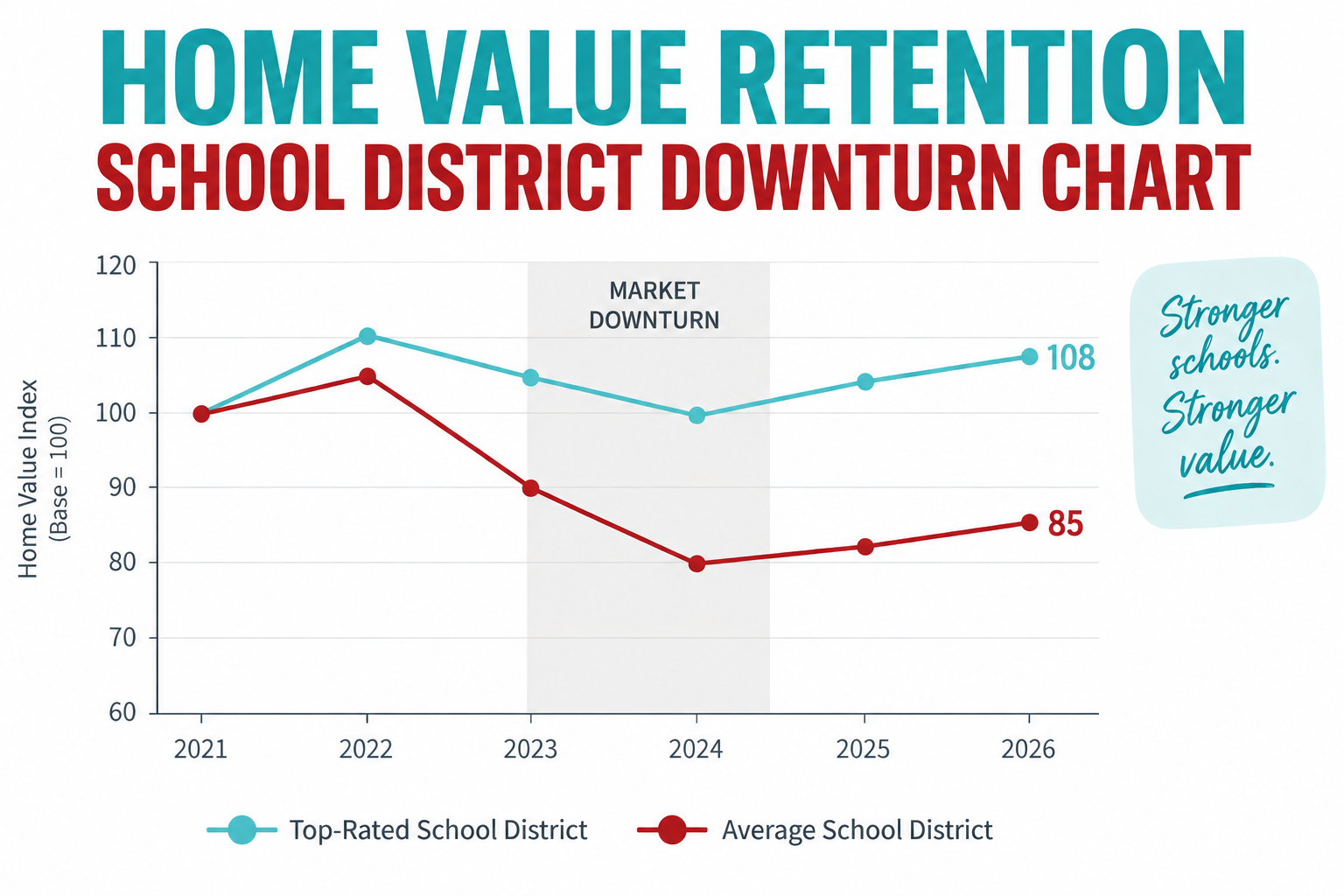
How to Spot Up-and-Coming Districts Before Prices Surge
For buyers priced out of established top-tier districts, there's still a way to capture this kind of growth: up-and-coming boundary shifts.
School ratings aren't static. Districts add new STEAM programs, open charter or magnet options, or build new facilities in growing suburban corridors. Signals worth watching:
- Recently appointed high-performing administration
- New bond funding for campus overhauls
- A growing base of young, college-educated families moving in
As test scores trend upward over a 3–5 year window, home values in that feeder pattern often experience an accelerated appreciation burst. Buying on the edge of a rising district is one of the most reliable ways to build forced equity over time.
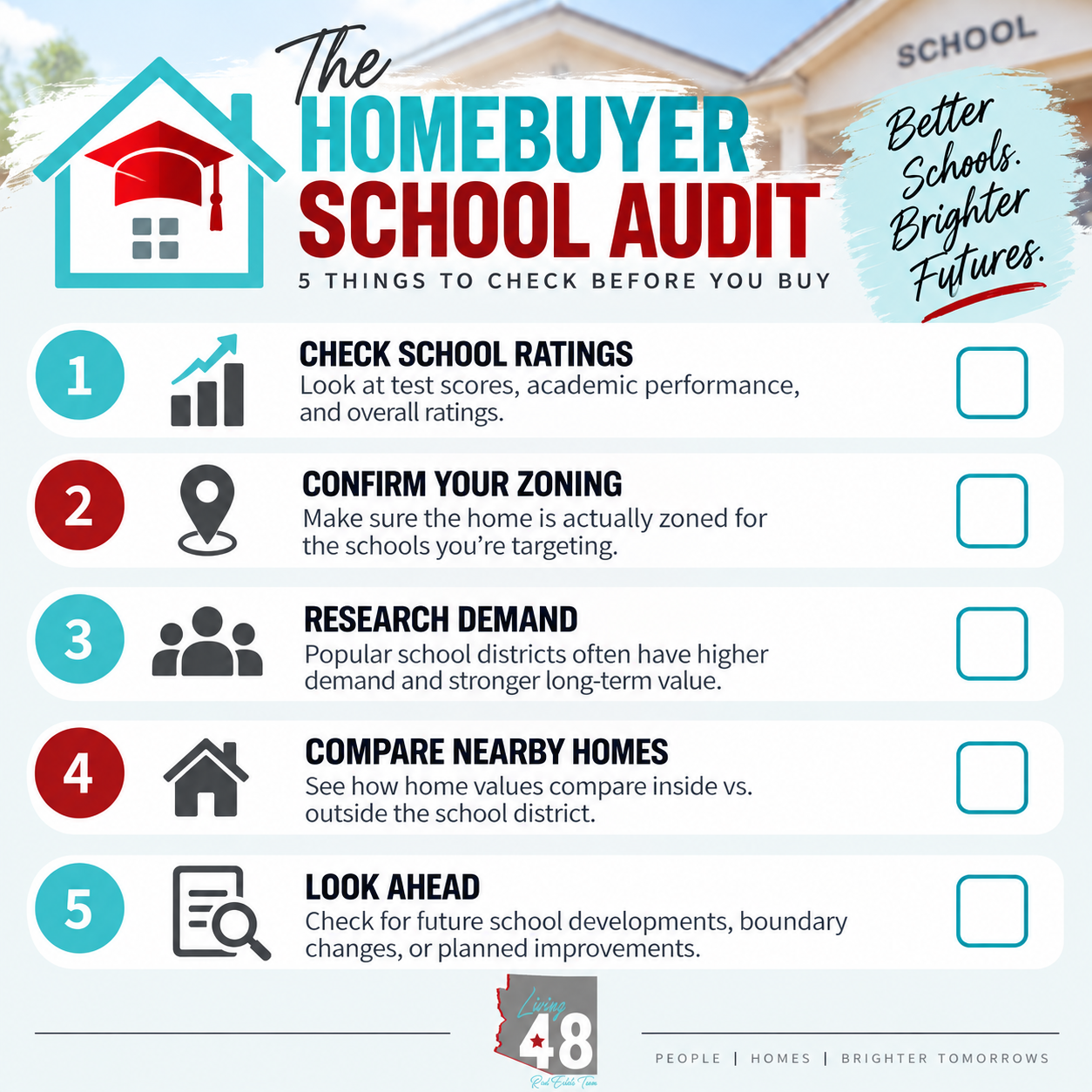
The 5-Step School Boundary Audit
Before writing an offer, run this checklist:
- Never trust MLS listings alone. School assignments are frequently misstated. Always verify the exact address on the official district boundary locator map.
- Check the full feeder pattern. A great elementary school doesn't help much if the assigned middle or high school ratings drop off sharply. Review the entire K–12 path.
- Audit charter and choice options. Confirm whether the area offers top-rated charter or specialized academy programs that add value to the broader community.
- Review district bond proposals. Recently passed school bonds signal strong community investment and upcoming facility upgrades.
- Compare days-on-market trends. Homes inside a strong boundary versus those just outside it often show a measurable gap in real buyer demand.
The Long-Term Equity Result
Combining strong school boundaries with solid home selection criteria builds a genuinely compounding wealth engine. Over a 10-year holding period, the upfront premium paid for a top district is typically returned multiple times over — through stronger appreciation, faster resale speed, and (for anyone who eventually rents the home out) a higher-quality tenant pool.
School boundary research deserves a permanent spot in any serious home search strategy — right alongside the core non-negotiables framework used to filter homes in the first place.
Frequently Asked Questions
Do school ratings really affect home value if I don't have kids? Yes. Strong school districts capture the largest share of future buyers (families), which supports resale value and liquidity even for buyers who never use the schools themselves.
How much can a school district boundary affect a home's price? The gap can be significant — even between nearly identical homes located close together, differences of tens of thousands of dollars are common when one side of a boundary line feeds into a stronger district.
How do I find out which school district a home is actually in? Never rely solely on an MLS listing. Always verify school assignment directly through the official district's boundary locator map, since listings can misstate assignments.
What's an "up-and-coming" school district, and how do I spot one? Signs include newly appointed high-performing administration, recently passed school bonds, new STEAM or charter programs, and a growing influx of young, college-educated families — all of which often precede rising test scores and accelerated home value growth.
Do top school districts protect home values during a market downturn? Generally, yes. Demand for strong schools tends to stay resilient even when overall buyer demand contracts, which helps homes in those boundaries retain value better and rebound faster.
Want a School Boundary Analysis for Your Search?
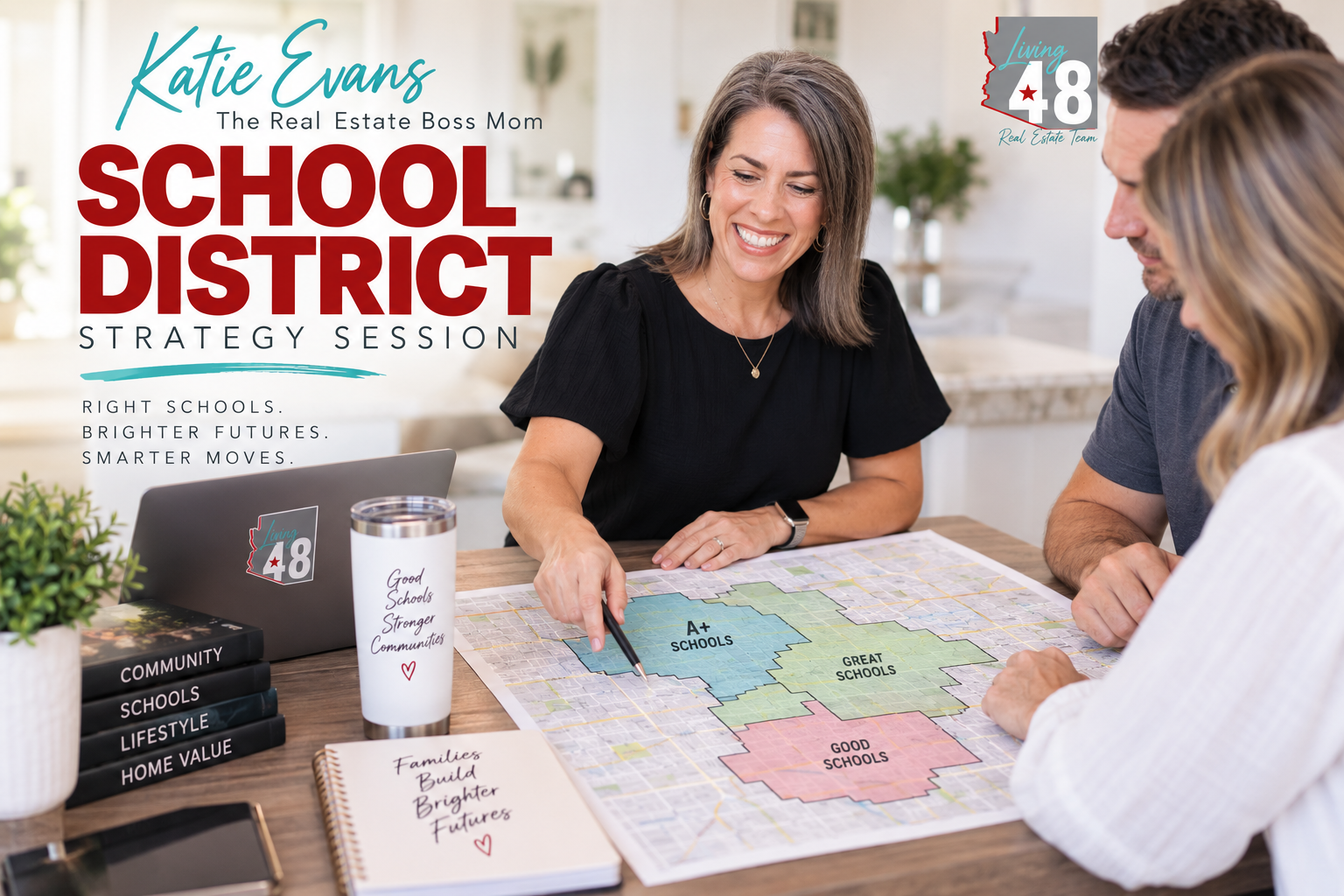
Boundary lines shift more often than people expect, and MLS data isn't always reliable. Book a strategy session and let's map out which neighborhoods give you the strongest combination of home fit and long-term equity protection.
Katie Evans is a REALTOR® with the Living 48 Real Estate Team at REAL Broker, known across the Valley as The Real Estate Boss Mom. She serves buyers and sellers throughout the East Valley — Mesa, Gilbert, Chandler, Queen Creek, Tempe, and Scottsdale — with data-driven, straight-talking guidance.

Katie Evans
Lead Agent | Katie Evans | Living 48 Real Estate Team
or another way