
Categories
Arizona BuyersPublished August 3, 2026
How to Choose a Home to Buy When the Scroll Never Ends

How to Choose a Home to Buy When the Scroll Never Ends
If you've looked at real estate apps so much this week that property lines show up when you close your eyes, it's time for an honest conversation.
What you're feeling has a name: house hunting fatigue. You've toured ten, fifteen, maybe twenty homes in person. You've scrolled hundreds more late at night. Every house feels almost right — the kitchen's too small, the yard slopes wrong, the neighborhood's slightly off — and instead of choosing, you freeze.
Here's the truth most of the industry won't say out loud: more listings aren't helping you figure out how to choose a home to buy. The endless inventory is the actual thing paralyzing you.
This breaks down why that happens, and hands you the exact system — The 3-Home Rule — that helps buyers cut through it and make a confident decision.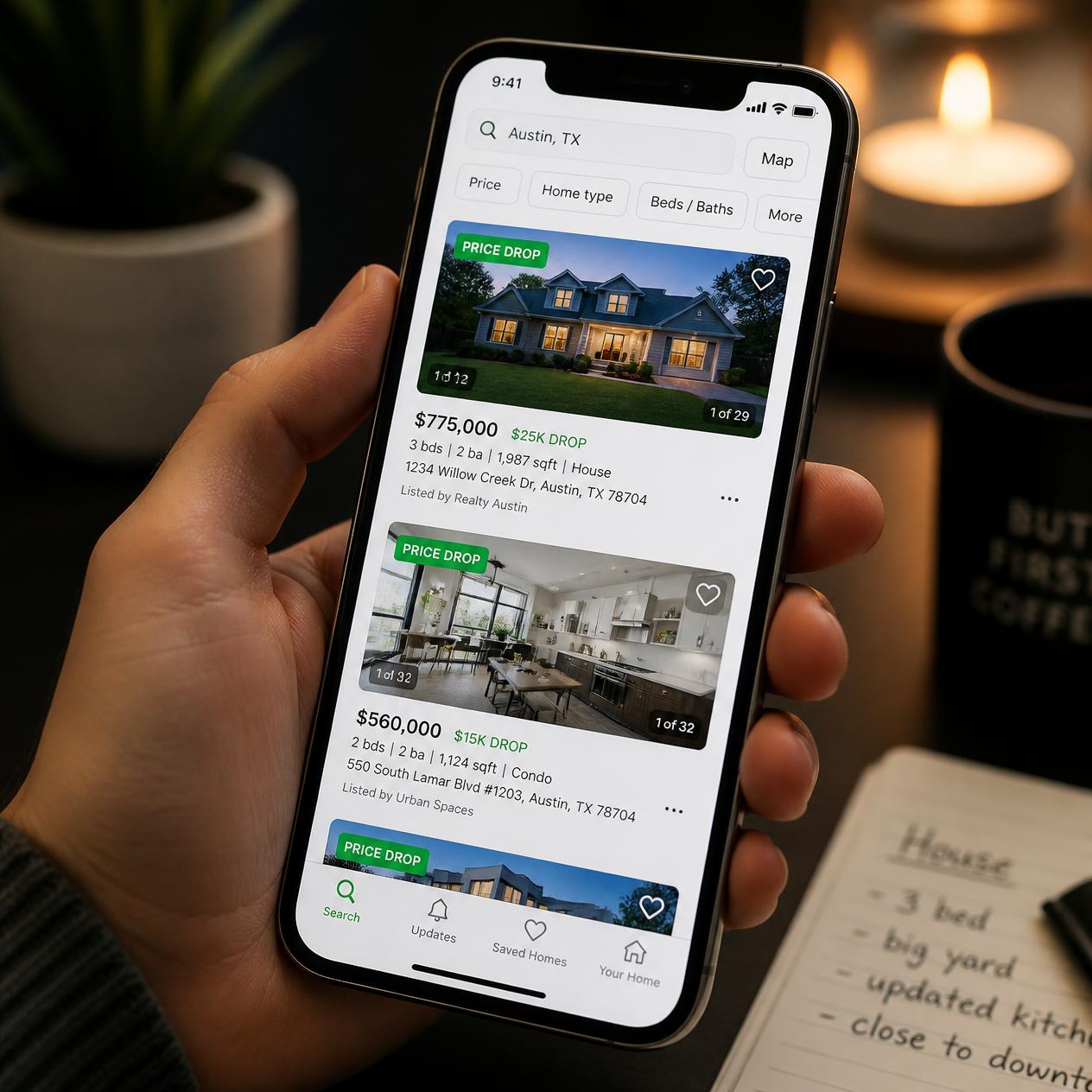
Why More Choices Are Making This Harder, Not Easier
Twenty or thirty years ago, buying a house meant sitting down with a local agent who handed you four or five printed listing sheets that matched your budget. You drove around one afternoon, picked the best of the handful, and wrote an offer. Information was scarce — so decisions were clear.
Today, a phone in your pocket feeds you thousands of listings, 3D walkthroughs, crime maps, school ratings, and fifteen years of pricing history at a swipe. That volume of choice creates a specific, predictable problem.
The "Frankenstein House" Trap
This is one of the biggest mistakes to avoid when buying a home: your brain starts building an imaginary property that doesn't exist. You take the chef's kitchen from a million-dollar listing, the private half-acre backyard from a home forty-five minutes outside the city, and the walkable location and low tax rate from a completely different property — and stitch them into one mythical "perfect" home.
Then you walk into real, in-budget houses and measure them against a fantasy. Nothing compares. You end up stuck for six, nine, or twelve months while prices and rates move past you.
The 5-3-1 Framework: What to Look For When Buying a House
Before touring another home, this filter has to come first — it's what makes the next step actually work.
Split a page into three columns:
Column 1 — 5 Absolute Non-Negotiables. Structural or financial elements you cannot change after closing: school district, maximum commute, required bedroom count, a flat driveway, a single-story layout if needed. A home has to check all five. Four out of five is a zero.
Column 2 — 3 High-Value Adaptables. Desirable features you can add or renovate later: a finished basement, a third garage bay, an updated kitchen, specific flooring. Wanted on day one, but their absence shouldn't kill the deal.
Column 3 — 1 Luxury Bonus. The cherry on top — a pool, an outdoor kitchen, smart-home automation, a view. Nice if present, zero impact on viability if it's not.
Writing this down and committing to it matters because fatigue erodes logic. Without it, buyers pass on homes that hit every non-negotiable simply because of carpet color.
The 3-Home Rule: How Many Houses Should You Look at Before Buying?
Once the 5-3-1 filter is locked in, this is the operational system that answers the real question.
The rule: your active comparison set can never hold more than three homes at once. Three is roughly the limit for clear, relative decision-making — a fourth option resets the brain back into confusion.
Step 1 — Active Selection. With your agent and live MLS data, filter by budget and your 5 non-negotiables, and isolate your top three available homes. Not ten. Three.
Step 2 — The Consolidated Tour. Walk all three back-to-back in a single afternoon, not spread across separate weeks. Comparing a home from a sunny Tuesday to one from a rainy Sunday three weeks later isn't a fair comparison — the sensory details fade.
Step 3 — The Immediate Bracket. The moment you leave the third house, rank all three on the spot: 1, 2, and 3. Don't sleep on it first.
The discipline that makes it work: when a new listing appears, it doesn't automatically earn a tour. It has to beat your current #3 on paper — price, disclosures, photos — before it's allowed in. If it's just "comparable," it's deleted and forgotten. If it's a clear upgrade, your old #3 drops off the bracket, the new listing takes its place, and you go tour it.
Capping choices at three stops the search for a mythical perfect home around the next corner, and turns house hunting into a series of clear, relative decisions instead of an endless scroll.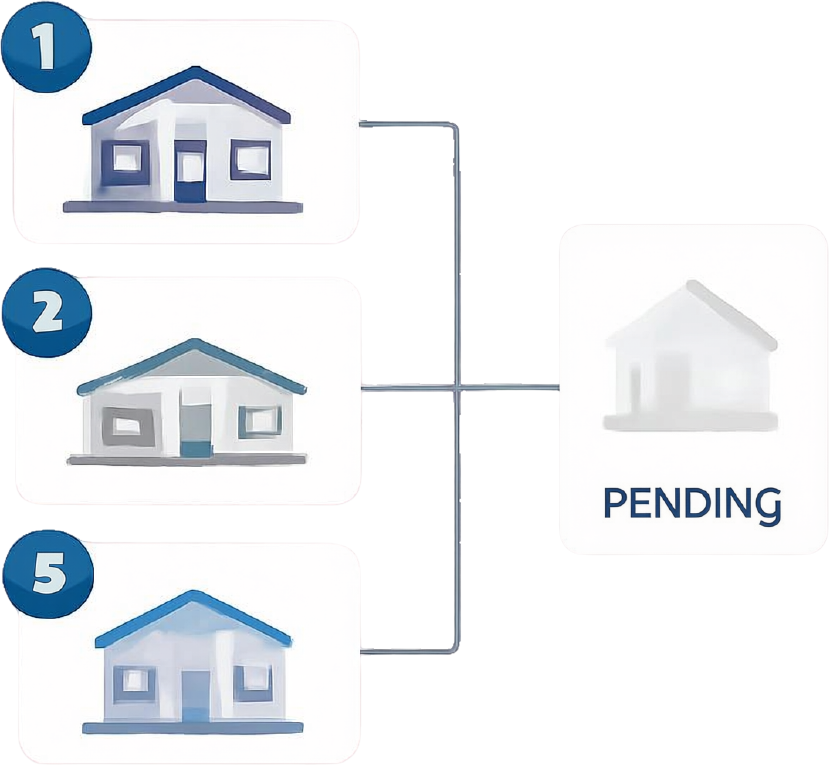
Case Study: 11 Months of Burnout to 9 Days to Contract
A couple once came in after eleven months and thirty-four in-person showings with another agent. They were exhausted, at odds with each other, and convinced the market simply didn't have their home.
The real issue wasn't inventory — it was that their baseline had drifted. They were comparing a home seen on a sunny April afternoon to one seen on a rainy November evening, with no consistent framework holding it together.
After wiping the slate clean, locking in their 5 non-negotiables, and applying the 3-Home Rule, a new listing beat their #3 home nine days later. They toured it, it became their new #1, and they wrote a clean, accepted offer shortly after — going from a year of stalled searching to a signed contract in under two weeks.
The 85% Rule of Real Estate
Unless the plan is a custom-built estate on raw land, the 100% perfect home doesn't exist. The realistic goal is the 85% home — one that satisfies every non-negotiable, has a solid structural footprint and a floor plan that works, and fits comfortably in the budget.
The remaining 15% — paint colors, flooring, countertops, landscaping — is almost always within reach to change over time. Holding out for that last 15% on day one, while prices and rates keep moving, is one of the costliest mistakes a buyer can make.
Your Weekend Action Plan
- Log out for 24 hours. Delete the apps if needed — give the scroll a break.
- Fill out the 5-3-1 Matrix. Write down your 5 non-negotiables and commit to them together if buying with a partner.
- Tell your agent the new plan. Ask them to select the top three homes on the market that fit your five non-negotiables, and schedule them back-to-back.
- Trust the ranking process. Stop eliminating homes over minor aesthetics — let a new listing earn its way into the bracket instead of chasing every notification.
Frequently Asked Questions
How many houses should you look at before buying? The 3-Home Rule caps active comparison at three homes at a time. New listings only replace an existing home in the bracket if they're a clear upgrade over your current #3.
What is house hunting fatigue? It's the exhaustion and decision paralysis that comes from viewing too many homes and listings without a structured filtering system, often driven by comparing homes seen under different conditions or timeframes.
What should my non-negotiables be when buying a home? Non-negotiables should be things that are difficult or impossible to change after closing — school district, commute time, bedroom count, single-story layout, or driveway grade — rather than cosmetic preferences.
Should I hold out for a home that checks every box? No. The 85% Rule suggests buying a home that satisfies your non-negotiables and fits your budget, since cosmetic items — paint, flooring, countertops — can typically be changed after closing.
What's the biggest mistake first-time homebuyers make? Building a "Frankenstein House" — combining unrelated features from different listings and price points into one imaginary standard that no real, in-budget home can meet.
Ready to Actually Narrow It Down?
If you've been stuck in the scroll, a clear, structured process — not more listings — is usually what's missing. Book a private, zero-pressure Strategy Call and let's build your 5-3-1 list and pull your actual top three.

If you're weighing where to focus that search, our recent breakdown on Queen Creek's current buyer leverage is a useful next read.
Katie Evans is a REALTOR® with the Living 48 Real Estate Team at REAL Broker, known across the Valley as The Real Estate Boss Mom. She serves buyers and sellers throughout the East Valley — Mesa, Gilbert, Chandler, Queen Creek, Tempe, and Scottsdale — with data-driven, straight-talking guidance.

Katie Evans
Lead Agent | Katie Evans | Living 48 Real Estate Team
or another way